

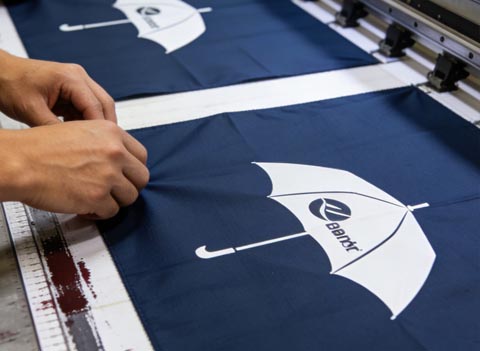
Promotional umbrellas with logo are widely used for corporate gifts, outdoor events, retail promotions, hospitality campaigns, golf tournaments, and distributor product lines. Compared with many small promotional items, umbrellas offer a large visible branding area and practical daily use, which makes them especially suitable for long-term brand exposure.
For commercial buyers, however, a logo umbrella project is not only about choosing a color and adding artwork. The final result depends on umbrella type, fabric, frame structure, printing method, logo position, sample approval, packaging, quality control, and shipping planning.
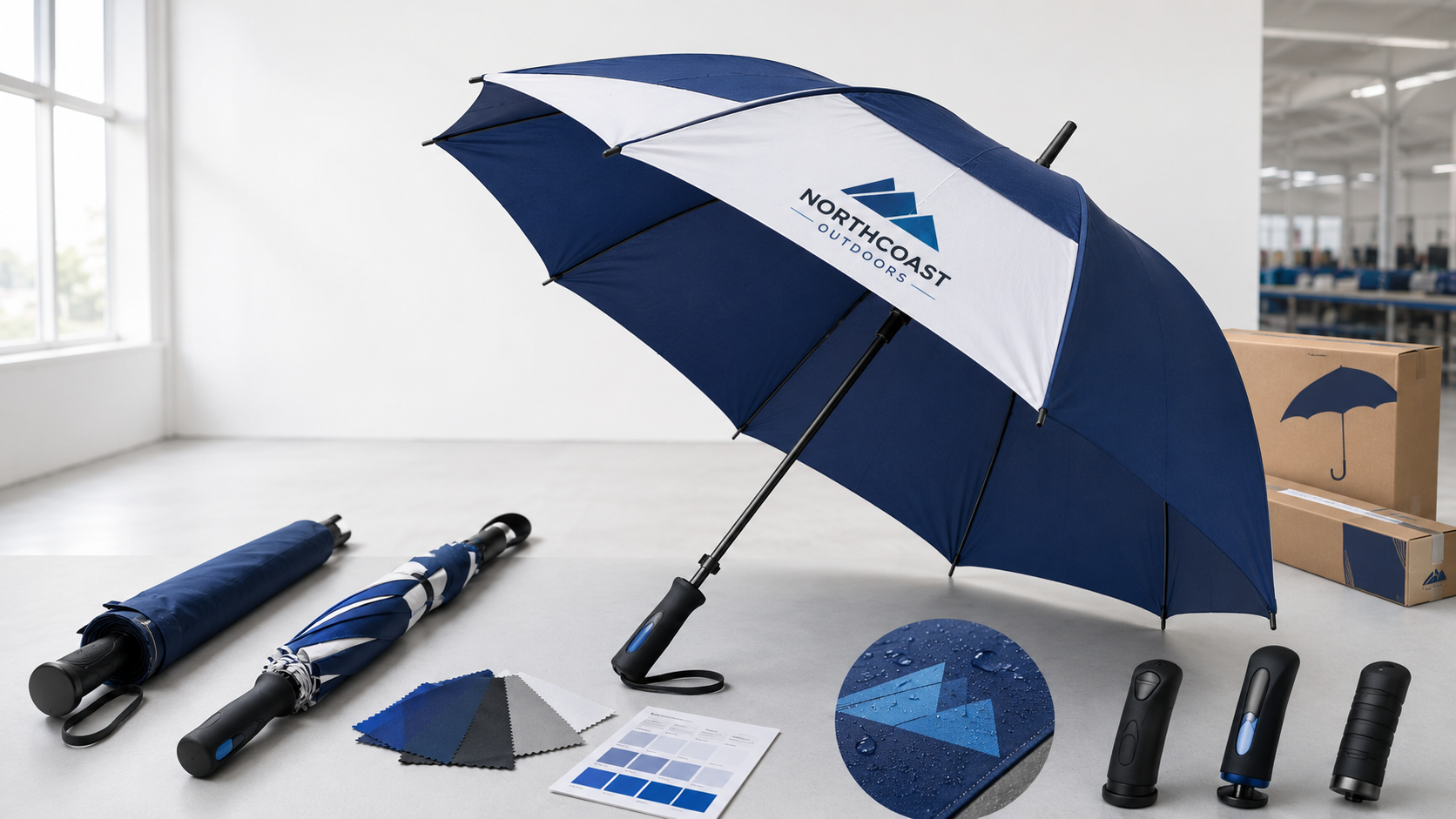
This guide explains how to source promotional umbrellas with logo in a practical way, so you can prepare a clearer inquiry, compare supplier quotations more accurately, and reduce avoidable production problems.
What Are Promotional Umbrellas?
Promotional umbrellas are umbrellas customized for brand promotion, corporate gifting, resale programs, events, or marketing campaigns. They usually include a printed logo, slogan, brand color, event message, or custom packaging.
Common use cases include:
- Corporate gift programs
- Trade shows and exhibitions
- Golf events and outdoor sponsorships
- Retail brand merchandise
- Distributor catalogs
- Hotel, resort, and travel promotions
- University, club, or organization campaigns
- Advertising agency projects
- Seasonal promotional campaigns
The key difference between a standard umbrella and a promotional umbrella is not only the logo. A good promotional umbrella should match the buyer’s usage scenario, target audience, budget, quality expectation, and delivery schedule.
Promotional Umbrellas with Logo: What Buyers Should Specify
Before asking for a quotation, buyers should define the product as clearly as possible. A vague request such as “umbrella with logo” can lead to very different prices from different suppliers.
A better inquiry usually includes:
| Specification | What to Confirm |
|---|---|
| Umbrella type | Folding umbrella, golf umbrella, straight umbrella, automatic umbrella, compact umbrella |
| Size | Arc size, open diameter, folded length, panel count |
| Fabric | Polyester, pongee, recycled fabric if available, coated fabric options |
| Frame | Metal, fiberglass, aluminum, wind-resistant structure |
| Handle | Plastic, EVA, wooden-look, rubberized, straight, curved, custom style |
| Logo position | One panel, multiple panels, full canopy, sleeve, handle tag, packaging |
| Printing method | Screen printing, heat transfer, digital printing, sublimation where suitable |
| Quantity | Trial order, event order, seasonal bulk order, annual program |
| Packaging | Individual sleeve, polybag, carton, custom box, retail-ready packaging |
| Destination | Country, port, delivery terms, requested shipping method |
| Deadline | Sample deadline, production deadline, event date, delivery date |
The more complete your specification, the easier it is for the supplier to recommend a realistic solution.
Choosing the Right Umbrella Type
Different promotional projects require different umbrella structures. The lowest-cost umbrella is not always the best choice, especially if the product will represent a brand at an event or be resold through distributors.
Folding Umbrellas
Folding umbrellas are compact, easy to carry, and suitable for corporate giveaways, commuter promotions, retail campaigns, and travel-related gifts.
They are a good choice when buyers need:
- compact size
- lower shipping volume
- practical daily use
- easy storage
- sleeve or pouch branding
- broad appeal across different markets
For logo placement, folding umbrellas commonly use one-panel printing, multiple-panel printing, sleeve printing, or custom color matching.
Golf Umbrellas
Golf umbrellas are larger and more visible. They are suitable for golf tournaments, outdoor events, hospitality programs, sports sponsorships, and premium corporate gifts.
They are a good choice when buyers need:
- larger canopy area
- stronger visual impact
- premium gift positioning
- outdoor event suitability
- wind-resistant frame options
- large logo display
Because the canopy is bigger, buyers should pay attention to frame strength, handle comfort, fabric quality, and carton size.
Straight Umbrellas
Straight umbrellas offer a classic profile and are often used for hotels, corporate programs, retail collections, schools, and formal promotional projects.
They are a good choice when buyers need:
- traditional appearance
- stable structure
- comfortable handle design
- larger branding area than compact umbrellas
- good balance between function and presentation
Straight umbrellas can work well when the buyer wants a more elegant or professional look.
Promotional Event Umbrellas
For short-term campaigns, buyers may focus on cost, quick production, and simple logo printing. For long-term use or resale, the focus should shift toward frame durability, fabric feel, logo accuracy, packaging, and after-sales consistency.
Logo Printing Options
Logo printing is one of the most important parts of a promotional umbrella order. The right method depends on logo complexity, color count, fabric type, print area, quantity, and budget.
Screen Printing
Screen printing is commonly used for simple logos, solid colors, and larger bulk orders. It is often suitable for one-color or limited-color logos on umbrella panels.
Best for:
- simple brand logos
- solid-color artwork
- larger order quantities
- cost-controlled promotional projects
- one-panel or multi-panel logo printing
Buyers should confirm Pantone color requirements, logo size, panel position, and whether the print needs to appear on dark fabric.
Heat Transfer Printing
Heat transfer printing can be useful for more detailed logos, gradients, or smaller customized designs depending on the material and artwork.
Best for:
- more complex logos
- sharper edge details
- multi-color designs
- smaller print areas
- sleeve or panel branding
Buyers should confirm whether the transfer finish matches the brand’s desired look and whether the artwork is suitable for the umbrella fabric.
Digital Printing
Digital printing may be used when artwork is more complex, full-color, or image-based. It can be suitable for designs that cannot be handled efficiently with traditional screen printing.
Best for:
- full-color artwork
- complex design concepts
- photographic or gradient designs
- sample development
- creative campaign umbrellas
Buyers should ask about color matching expectations, fabric compatibility, and whether the design will be printed on individual panels before umbrella assembly.
Sublimation Printing
Sublimation is often used for full-panel or full-canopy designs on suitable polyester fabrics. It can create bright, all-over graphics when the product and fabric are appropriate.
Best for:
- full canopy artwork
- repeating patterns
- event graphics
- colorful promotional themes
- retail-style umbrella designs
For full-canopy designs, buyers should check panel alignment, artwork template, seam position, and whether a pre-production sample is recommended.
Logo Placement Options
Logo placement affects both visibility and cost. A small logo on one panel is usually simpler than printing across multiple panels or creating a full-canopy design.
Common logo positions include:
- one canopy panel
- two opposite panels
- four panels
- all panels
- full canopy design
- umbrella sleeve
- woven label
- handle tag
- custom packaging
- carton mark
For promotional use, one-panel printing is often enough for simple giveaways. For retail brands, golf events, or premium campaigns, multiple logo positions may create a stronger presentation.
Materials and Components to Compare
A promotional umbrella should look good, but it also needs to function properly. Buyers should compare more than the logo price.
Canopy Fabric
Common fabric options may include polyester or pongee-style fabric. Buyers should compare fabric weight, hand feel, water repellency, coating options, and color availability.
Questions to ask:
- Is the fabric suitable for the selected printing method?
- Is the color from existing stock or custom dyed?
- Will dark fabric affect logo visibility?
- Is the fabric suitable for outdoor event use?
- Does the fabric match the target price level?
Frame Structure
The frame affects durability, user experience, and price. A basic promotional umbrella may use a simpler metal frame, while higher-end umbrellas may use fiberglass or reinforced components.
Compare:
- shaft material
- rib material
- number of ribs
- wind-resistant structure
- opening mechanism
- joint strength
- handle connection
- overall weight
For golf umbrellas and outdoor event umbrellas, frame strength is especially important.
Handle Options
The handle influences both appearance and comfort. Handle choices can also help match the brand image.
Common options include:
- plastic handle
- EVA handle
- rubberized handle
- wooden-look handle
- curved handle
- straight handle
- custom color handle
- branded handle tag
A premium-looking handle can make the umbrella feel more valuable, even when the canopy design is simple.
MOQ and Price Factors
MOQ and pricing depend on the umbrella type, fabric, printing method, number of logo positions, packaging requirements, and customization level.
The main cost factors include:
- umbrella model
- size and structure
- fabric type
- frame material
- number of print colors
- number of logo positions
- printing method
- custom fabric color
- custom handle or components
- individual packaging
- carton requirements
- sample requirements
- shipping volume and destination
Buyers should avoid comparing quotations only by unit price. A lower quote may use a different fabric, lighter frame, simpler handle, fewer print positions, or less protective packaging.
A professional quotation should clearly show what is included.
Sampling Before Bulk Production
For custom logo umbrellas, sampling is an important step, especially when the order includes brand color requirements, special artwork, full-canopy printing, retail packaging, or a new umbrella model.
A sample can help confirm:
- umbrella size and structure
- fabric color and feel
- logo size and position
- print clarity
- color matching
- handle style
- sleeve design
- packaging appearance
- overall product impression
For simple repeat orders, a digital proof or production artwork confirmation may be enough. For new designs, a physical sample is often the safer choice.
YJ Umbrella can support buyers with sample development based on the umbrella type, logo artwork, and project requirements.
Artwork Preparation
Artwork quality directly affects print quality. Buyers should prepare clear logo files whenever possible.
Recommended artwork files include:
- AI
- EPS
- SVG
- high-resolution PNG when vector files are not available
Buyers should also provide:
- Pantone color references if required
- logo size preference
- placement instruction
- brand guideline if available
- artwork direction for each umbrella panel
- approval contact for proof confirmation
A common mistake is sending a low-resolution image and expecting sharp printing. For professional logo umbrellas, vector artwork is strongly preferred.
Production Process Overview
A typical custom umbrella order may include the following steps:
- Inquiry and specification review
- Model recommendation and quotation
- Artwork confirmation
- Sample or pre-production proof
- Material preparation
- Logo printing
- Umbrella assembly
- Inspection and quality checking
- Packaging
- Carton packing
- Shipping arrangement
The exact process depends on the umbrella style and customization level. Full-canopy printing, custom colors, special packaging, or new components may require additional coordination.
Quality Control Points
Quality control should cover both the umbrella itself and the branding details.
Important inspection points include:
- canopy stitching
- fabric condition
- print position
- logo clarity
- color consistency
- opening and closing function
- frame alignment
- rib connection
- handle attachment
- sleeve fit
- packaging condition
- carton marking
- quantity check
For commercial buyers, the main goal is consistency. A sample may look good, but the bulk order must also match the approved standard.
Packaging Options
Packaging should match the sales channel and delivery method. A corporate giveaway may only need a sleeve and carton packing, while a retail program may require barcode labels, custom boxes, hang tags, or other packaging details.
Common packaging options include:
- matching umbrella sleeve
- individual polybag
- kraft box
- color box
- hang tag
- barcode label
- carton mark
- pallet packing where required
- custom insert card
Buyers should confirm packaging early because it affects cost, carton size, production time, and shipping volume.
Shipping Considerations
Umbrellas can take more space than many small promotional products, especially golf umbrellas and straight umbrellas. Shipping cost can vary depending on carton size, gross weight, destination, and delivery method.
Buyers should consider:
- folded length
- carton dimensions
- units per carton
- gross weight
- shipping method
- destination port or address
- delivery deadline
- customs documentation requirements
- event date or sales launch date
For urgent event orders, buyers should allow enough time for sampling, production, inspection, and international shipping.
Common Mistakes to Avoid
Choosing the Cheapest Model Without Checking Structure
A very low unit price may result in a lighter frame, thinner fabric, weaker handle, or less durable construction. Always compare specifications, not just price.
Ignoring Logo Size and Panel Shape
Umbrella panels are curved and sewn together. A logo that looks good on a flat screen may need adjustment for real umbrella printing.
Confirming Production Without Artwork Approval
Artwork approval should happen before bulk production. Confirm logo size, print color, position, and orientation clearly.
Forgetting Packaging Requirements
Packaging affects presentation, protection, and shipping volume. For retail or distributor projects, packaging should be included in the quotation from the start.
Leaving Shipping Until the Last Step
Shipping cost and timing can influence the entire project. Buyers should share the destination and deadline during the quotation stage.
How to Compare Suppliers
When comparing suppliers for promotional umbrellas, look beyond the initial unit price. A reliable supplier should help clarify specifications, printing options, packaging, and production details.
Useful comparison points include:
- Does the supplier ask detailed questions before quoting?
- Are umbrella specifications clearly listed?
- Are printing methods explained properly?
- Is artwork confirmation included?
- Is sampling available?
- Are packaging options clear?
- Are production and shipping steps explained?
- Are quality control points discussed?
- Is the quotation easy to understand?
- Can the supplier support repeat or seasonal orders?
YJ Umbrella works with global commercial buyers on custom umbrellas, logo printed umbrellas, folding umbrellas, straight umbrellas, golf umbrellas, promotional umbrellas, and OEM / ODM umbrella projects. Buyers can share artwork, quantity, target market, umbrella type, and packaging requirements to receive a more accurate quotation.
Buyer Checklist Before Requesting a Quote
Before contacting a supplier, prepare the following information:
- Umbrella type
- Quantity
- Target price range if available
- Logo file
- Number of print positions
- Preferred printing method if known
- Fabric color
- Handle preference
- Packaging requirement
- Destination country
- Shipping method preference
- Required delivery date
- Sample requirement
- Any retail or distributor compliance requirements
A clear inquiry helps reduce back-and-forth communication and makes supplier quotations easier to compare.
Conclusion
Promotional umbrellas with logo can be a practical and visible branding product when the specifications are planned correctly. The best result comes from matching the umbrella type, material, printing method, logo placement, packaging, and shipping plan to the real purpose of the project.
For simple event giveaways, a cost-effective folding umbrella with one-panel logo printing may be enough. For golf events, retail programs, or premium corporate gifts, buyers may need a stronger frame, larger canopy, better handle, more detailed artwork control, and customized packaging.
YJ Umbrella can help buyers evaluate umbrella options, logo printing methods, samples, packaging, and bulk order requirements based on their project needs. If you are sourcing promotional umbrellas with logo for an upcoming campaign, event, or distributor program, preparing clear specifications is the first step toward an accurate quotation.
FAQ
1. What is the best umbrella type for promotional umbrellas with logo?
The best type depends on the project. Folding umbrellas are practical for everyday giveaways and lower shipping volume. Golf umbrellas are better for outdoor events, sponsorships, and premium corporate gifts. Straight umbrellas are suitable for classic business gifts, hotels, and retail-style projects.
2. Which printing method is best for logo umbrellas?
Screen printing is often suitable for simple solid-color logos and larger orders. Heat transfer can work well for more detailed logos. Digital printing or sublimation may be better for full-color artwork, gradients, or full-canopy designs. The best method depends on logo complexity, fabric, quantity, and budget.
3. Can I print a logo on more than one umbrella panel?
Yes. Buyers can usually print a logo on one panel, two panels, four panels, or all panels depending on the umbrella model and budget. Multi-panel printing increases visibility but may also increase cost and production complexity.
4. Do I need a sample before placing a bulk umbrella order?
A sample is recommended for new designs, full-canopy printing, special packaging, custom colors, or premium projects. For simple repeat orders, artwork approval or a production proof may be enough, depending on the buyer’s requirements.
5. What information should I send to get an accurate quotation?
Send the umbrella type, quantity, logo file, print position, fabric color, packaging requirement, destination country, delivery deadline, and any sample request. Clear specifications help the supplier recommend the right model and quote more accurately.
