

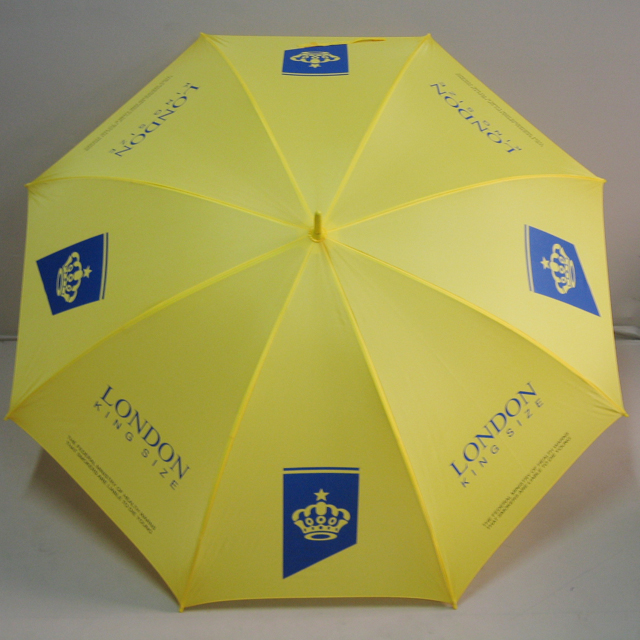
A custom umbrella factory audit checklist is a fixed set of things you verify before you release a deposit: the supplier’s legal identity, which production steps happen under their own roof, where frames and fabric come from, how logos are printed and colour-matched, how quality is inspected and recorded, and how goods are packed and documented for export. Work through those seven areas and most sourcing disasters become visible before they cost you money.
The reason this matters more in umbrellas than in many product categories is structural. An umbrella is an assembly of components — frame, shaft, canopy, handle, runner, tips, sleeve — and very few suppliers make all of them. A “factory” in this industry is usually a canopy cutting, sewing, printing and assembly operation that buys frames from specialist frame makers. That is normal. What is not normal is a supplier who will not tell you which parts are theirs.
Below is the checklist, organised in the order you should actually work through it.
Step 1: Verify the company before you verify the factory
This is a desk exercise you do before spending anything on travel or third-party services.
Ask for the business licence and check the registered scope, registered capital, and registration date. In China, the licence carries a unified social credit code you can look up. A trading company’s scope will read as trade or import/export; a manufacturer’s will list production.
Check export records. Customs or bill-of-lading data services show whether the company has actually shipped umbrellas, to which countries, and at what frequency. A supplier quoting confidently on 20,000 golf umbrellas with no export history is a risk, though not automatically a fraud — some genuine factories export only through agents.
Establish factory versus trading company honestly. Neither is inherently wrong. A trading company with strong QC staff and three loyal factories can outperform a small factory with no English-speaking coordinator. The failure case is the intermediary who conceals the arrangement, because then you cannot audit anything and every technical question gets a delayed answer.
Three questions that separate the two quickly: Who owns the machines? Can I video-call from the sewing line right now, unannounced? What is the address on your export declaration?
Step 2: Audit which processes are in-house
Once you are on the floor — physically or by live video — the point is not to be impressed by the size of the building. It is to map the process chain and find the outsourced links, because outsourced links are where lead time slips and quality control gets thin.
| Process | Usually in-house at a real umbrella factory | Commonly outsourced | Why it matters to you |
|---|---|---|---|
| Fabric cutting | Yes | Rarely | Cutting accuracy drives canopy shape and panel alignment |
| Canopy sewing | Yes | Sometimes to satellite workshops in peak season | Peak-season subcontracting is the main cause of inconsistent stitching |
| Logo printing | Often, for screen printing | Sublimation and embroidery frequently outsourced | Determines colour control and how fast a reprint can be done |
| Frame manufacturing | Almost never | Yes, to specialist frame plants | Frame quality is bought, not made — so ask for the frame supplier’s name |
| Shaft, handle, tips | No | Yes | Handle finish and moulding flash are common cosmetic rejects |
| Assembly | Yes | No | Where component defects should be caught |
| Packing | Yes | Sometimes | Where wrong-quantity and wrong-label errors happen |
A factory that says everything is in-house, including frames, is usually either exaggerating or defining “in-house” as “within our group of affiliated workshops”. Push for specifics. A supplier who explains their outsourcing clearly is easier to work with than one who claims total vertical integration. If you want to see how a transparent supplier lays this out, YJ Umbrella’s umbrella production process page is a reasonable reference point for the sequence you should be able to follow on any factory floor.
Trade-off to accept: more in-house steps generally mean better control and faster reworks, but such factories often carry higher overhead and set higher minimums. A workshop-based supplier may quote lower and take smaller orders while giving you less traceability.
Step 3: Verify frames, shafts, and fabric against the quotation
Most disputes trace back to a specification that was agreed loosely and built cheaply. Audit the material chain by asking to see incoming components and their labels, not just finished samples.
| Component option | Typical use | What to check during the audit | Trade-off |
|---|---|---|---|
| Fiberglass ribs | Golf umbrellas, windproof models, coastal or event use | Rib thickness, whether ribs are solid or hollow, joint riveting | Better wind recovery and no rust, but higher unit cost and slightly heavier feel in small folding models |
| Steel ribs | Budget promotional straight and folding umbrellas | Galvanising or coating on the ribs, rust on stored stock | Cheapest and rigid, but takes a permanent set once bent and corrodes in humid markets |
| Aluminium shaft | Folding umbrellas where weight matters | Wall thickness, anodising, telescoping tolerance | Light and corrosion-resistant, but dents rather than flexes and adds cost over steel |
| 190T pongee | Standard promotional canopies | Coating type, GSM consistency between rolls | Lowest cost and fine for giveaway use, but thinner hand-feel and shorter service life |
| 210T pongee | Mid-tier corporate gifts and retail | Coating, colour-fastness swatch, water repellency test | Noticeably better drape and durability for a modest cost increase |
| 210D / 420D oxford | Golf and heavy-duty umbrellas | Weave density, seam strength at rib tips | Strong and premium-feeling, but heavier, slower to dry, and prints slightly less crisply than pongee |
Three practical floor checks worth doing yourself:
- Open and close a production unit 20–30 times. Runner sticking and rib-joint noise appear quickly.
- Ask for a water spray test on a canopy from current production, not from the sample room.
- Compare two units from different production dates for colour drift between fabric rolls.
Trade-off to accept: upgrading from steel to fiberglass and from 190T to 210T is a real quality gain, and it will move your unit price. Decide which upgrade your end use actually needs. A conference giveaway rarely justifies a golf-grade frame; an outdoor tournament umbrella almost always does.
Step 4: Audit printing capability against your artwork
Printing is where brand-sensitive buyers get hurt, because the method that suits the factory is not always the method that suits your logo.
| Method | Best suited to | Colour and artwork limits | Cost behaviour | Trade-off |
|---|---|---|---|---|
| Screen printing | Solid-colour logos, 1–4 colours, large runs | Poor with gradients and fine detail | Low per-piece, screen setup charged per colour | Cheapest at volume, but each extra colour adds setup and registration risk |
| Heat transfer | Small detailed logos, multi-colour marks | Handles detail well; can leave a visible carrier edge | Moderate, low setup | Good detail on small areas, but hand-feel and edge visibility are noticeable up close |
| Sublimation | Full-canopy designs, photographic artwork | Excellent detail; only works on polyester, and only light base fabric | Higher setup, competitive on large full-coverage runs | Best visual result, but requires printing before cutting and sewing, which lengthens lead time and makes late artwork changes expensive |
| Embroidery | Logos on sleeves, handles, valances | Limited detail; small text degrades | Priced by stitch count | Premium perceived value, but not viable for large canopy panels and adds weight and cost |
During the audit, ask to see: a Pantone matching record, a physical print sample of your own logo (not a generic one), and how they handle colour approval sign-off. A supplier who cannot produce a lab-dip or print approval workflow will improvise on your order.
Reviewing the full range of decoration methods before you commit — for example on a supplier’s logo printing options page — makes the audit conversation faster, because you can ask about specific processes rather than general capability.
Trade-off to accept: sublimation gives the most impressive result and the least flexibility. Once artwork is printed to fabric rolls, changing it means starting the canopy over.
Step 5: Audit the quality control system, not the quality claim
Every supplier says quality is important. The audit is about whether there is a system that would catch a defect without you asking.
Look for:
- Defined inspection points at incoming material, in-line sewing, post-assembly, and pre-packing
- Written inspection records for recent orders, with defect categories and counts
- AQL standards in use, commonly AQL 2.5 for major and 4.0 for minor defects in promotional goods, though the applied level should be confirmed per order
- Functional test capability — open/close cycle testing, water resistance, and some form of wind testing
- A defect handling procedure — what happens to rejected units, and who authorises rework
Ask for the last third-party inspection report the factory received from any client. Willingness to share is informative in itself. Documented procedures such as a published quality control process give you a baseline to compare against what you see on the floor.
Trade-off to accept: factories with mature QC systems price that overhead into the quote. If you choose a cheaper supplier with informal QC, plan and budget for third-party inspection instead. Skipping both is where large claims come from.
Step 6: Audit sampling, MOQ, and lead time realism
This is where you test whether the commercial terms match the production reality you just observed.
Sampling. Expect a pre-production sample that matches the final specification, not a stock umbrella with a sticker. Sample fees and sample lead times vary widely across the industry; the number that matters more is how long a revised sample takes, because that reveals real internal turnaround. Understanding a supplier’s sample policy before you request one avoids arguments about fees later.
MOQ. Minimums in this industry are typically driven by fabric roll width, frame batch purchasing, and print setup rather than by assembly. That is why MOQ often drops if you accept a stock frame and stock canopy colour, and rises for custom Pantone fabric. Ask why the MOQ is what it is. A supplier who can explain the driver is quoting from real constraints.
Lead time. Ask for the breakdown, not the total: material procurement, printing, sewing, assembly, QC, packing. Then ask what their current order book looks like. Peak season for umbrellas is seasonal and regional, and a quoted lead time given in a slow month may not hold in a busy one.
Step 7: Audit packaging, labelling, and shipping documentation
The last stage of the checklist is the one buyers most often skip, and it is where retail-bound orders fail compliance.
- Individual packaging: sleeve, polybag, header card, or gift box, and whether they can print on it
- Barcodes and retail labelling, if you are shipping to a chain or marketplace
- Carton specification: units per carton, carton dimensions, gross and net weight, drop-test practice
- Export documents: commercial invoice, packing list, certificate of origin, and any test reports your market requires
- Whether they quote FOB, CIF, or DDP, and who books the forwarder
If your goods enter a regulated retail channel, confirm early which chemical or safety testing your destination market requires and who pays for it. This is negotiated far more easily before the deposit than after production.
Which audit method should you use?
| Audit method | Relative cost | What it catches | What it misses |
|---|---|---|---|
| Document review only | Minimal | Legal identity, export history, obvious mismatches | Everything about actual production |
| Live video walkthrough | Low | Whether the facility exists, rough scale, process flow | Staged routes, material substitution, record accuracy |
| Third-party audit | Moderate | Systems, capacity, records, compliance | Day-to-day behaviour outside audit day |
| Your own on-site visit | High (travel) | Culture, honesty of answers, floor detail | Requires you to know what to look at |
Trade-off to accept: a third-party audit is the best cost-to-confidence ratio for a first order of meaningful value. Its limitation is that it captures a single day. Combining a document review upfront with pre-shipment inspection at the end covers more of the risk than a single audit event.
Common mistakes buyers make during a factory audit
Judging by showroom rather than by line. A well-built sample room proves someone can make one good umbrella. Ask to see current production for another customer.
Auditing capability but not capacity. The factory can make your product. Whether it can make it in your quantity, in your window, alongside its existing order book, is a separate question.
Accepting a sample without a signed specification. If the spec sheet does not list rib material, rib count, canopy size, fabric, coating, print method, Pantone references, and packaging, then “same as sample” is unenforceable.
Negotiating price without changing specification. A supplier pushed below their cost will find the savings somewhere — usually thinner fabric, a cheaper frame, or fewer QC passes. If you need a lower price, remove specification deliberately and in writing.
Ignoring communication quality. Response time and technical accuracy during the quoting stage are a fair predictor of how problems will be handled during production.
Skipping pre-shipment inspection because the audit went well. They test different things at different times.
Your sourcing decision checklist
Score each shortlisted supplier from 1 to 5:
- Legal identity verified and consistent with the address they gave
- Process chain mapped, with outsourced steps named
- Frame source disclosed and frame type matched to your end use
- Fabric specification confirmed with a physical swatch
- Print method appropriate to your artwork, with a colour approval workflow
- Documented inspection points and shareable records
- Pre-production sample matching a signed specification sheet
- Lead time broken down by stage and checked against current workload
- Packaging, labelling, and export documentation confirmed
- Responsiveness and technical clarity during quoting
Weight the items that carry the most risk for your specific order. An event organiser with a fixed date should weight lead time and capacity heavily. A retail brand should weight print colour control, packaging, and compliance documentation. A promotional distributor buying repeat runs should weight consistency between production batches above almost everything else, since your reorder has to match what you already delivered.
Conclusion
A custom umbrella factory audit checklist is only useful if you apply it before the deposit, in the order above: identity, process, materials, printing, quality control, commercial terms, then logistics. Every choice in that chain has a cost attached — better frames raise your unit price, better print methods reduce your flexibility, and better QC systems show up in the quote. A good supplier will tell you what each upgrade costs you rather than claiming there is no trade-off. Details on scope and capability are also worth confirming in writing, which is what a clear OEM and ODM umbrella service description should give you.
If you are preparing an audit or a specification sheet for an upcoming umbrella order, contact YJ Umbrella with your quantity, artwork, and target delivery date to discuss specifications, samples, and production terms.
FAQ
Q1: The supplier says they are a factory, but their address is an office building. Is that a red flag? Not on its own. Many Chinese umbrella manufacturers run a sales office in a city centre and production in an industrial area 30–90 minutes away. The red flag is refusal to give you the production address, or an inability to arrange a live video call from the line on short notice.
Q2: Can I skip the factory audit if I order a third-party inspection instead? They cover different risks. An audit tells you whether the supplier can do the job before you pay; an inspection tells you whether they did it before you take delivery. For a first order of meaningful value, doing only the inspection means you discover a capability problem when it is already too late to change suppliers.
Q3: How do I check frame quality if the factory does not make frames? Ask for the frame supplier’s name and the frame model code, then request that it be written into your specification sheet. During the audit, look at incoming frame packaging and labels, and open and close production units repeatedly. Locking the frame model in writing prevents substitution on reorders, which is the more common problem.
Q4: Our logo has a gradient. Will screen printing work? Generally not well. Gradients and fine detail push you toward heat transfer for small placements or sublimation for full-canopy designs. Both cost more than screen printing, and sublimation in particular locks your artwork in early because the fabric is printed before cutting. If budget is fixed, it is usually better to supply a simplified single-colour version of the logo than to force a gradient through screen printing.
Q5: The quotes I received differ by more than 30%. What usually explains the gap? Most often the specification is not identical. Check rib material and rib count, canopy diameter, fabric type and coating, number of print colours and print positions, handle material, and packaging. Frame source and print colour count alone can account for most of a gap that size. Compare quotes by rebuilding them against one specification sheet rather than by headline price.
